

Paver Patio vs. Concrete Patio: Which Is the Better Investment?
If you're planning to upgrade your backyard, one of the biggest decisions you'll make is whether to install a paver patio or a concrete patio. Both provide a durable outdoor living space, but they differ significantly in appearance, maintenance, longevity, and long-term value.
For homeowners who want an outdoor space that looks great today and continues to perform for decades, understanding these differences can help you make the right investment.
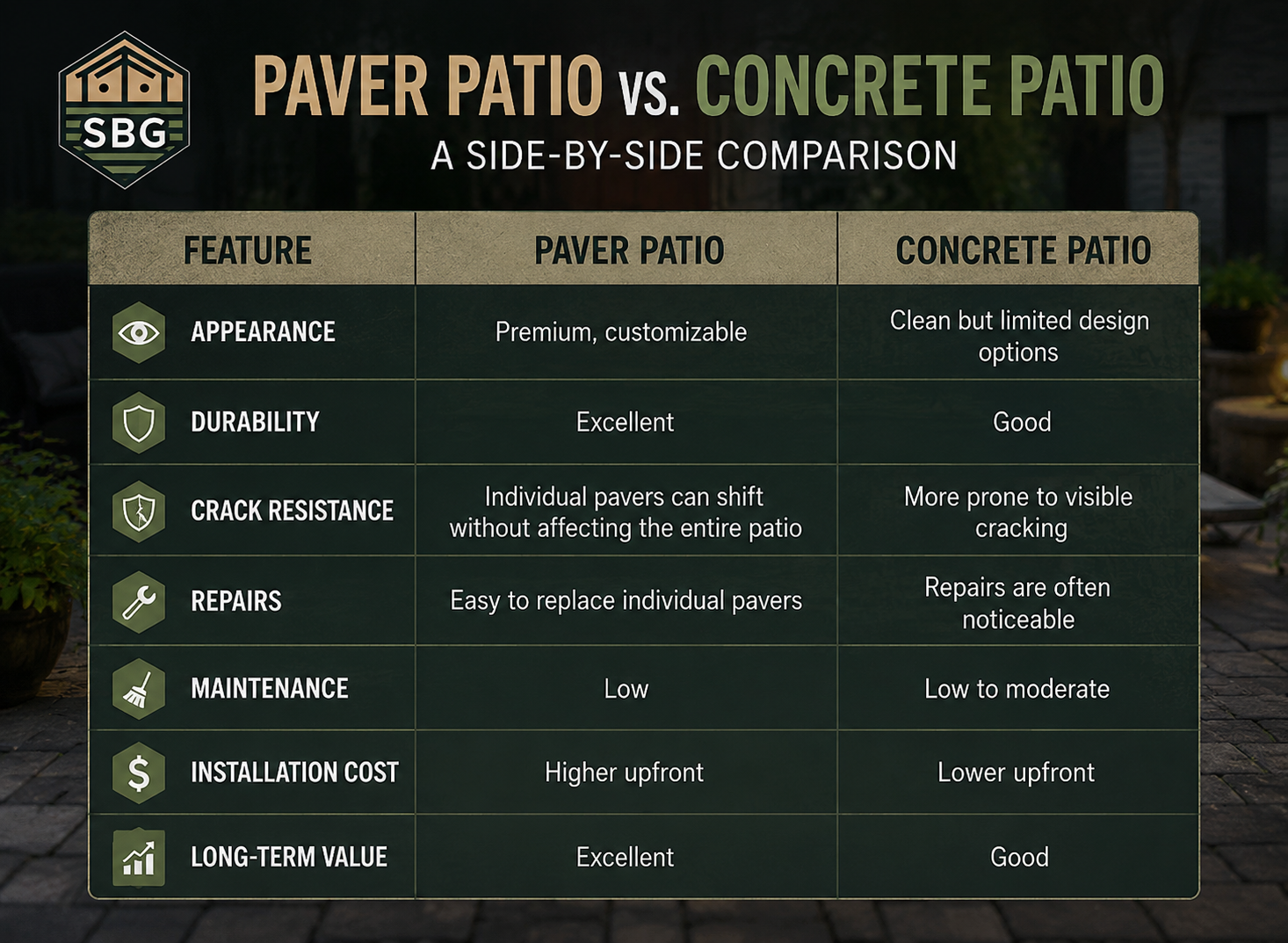
Quick Comparison
What Is a Paver Patio?
A paver patio is built using individual concrete or natural stone pavers installed over a compacted gravel and sand base.
Because each paver is installed separately, the patio has flexibility that allows it to adapt to natural ground movement.
Paver patios are available in a wide variety of:
Colors
Shapes
Sizes
Textures
Patterns
This makes it easy to create a custom outdoor living space that complements your home's architecture.
What Is a Concrete Patio?
A concrete patio is typically poured as one continuous slab.
Homeowners can choose from several finishes, including:
Smooth concrete
Brushed concrete
Stamped concrete
Colored concrete
Exposed aggregate
Concrete creates a clean, modern appearance and generally costs less to install than pavers.
Appearance: Which Looks Better?
For homeowners looking to create a high-end outdoor living space, pavers usually offer greater visual appeal.
Why Pavers Stand Out
Pavers create texture and depth that a concrete slab cannot easily replicate.
Popular design options include:
Herringbone patterns
Running bond layouts
Basket weave designs
Mixed-size paver combinations
Decorative borders
The result is a patio that feels custom-built rather than poured in place.
Concrete Design Options
Concrete has improved significantly over the years.
Stamped and colored concrete can imitate:
Natural stone
Brick
Slate
Wood textures
While these finishes can be attractive, they generally lack the depth and realism of individual pavers.
Durability and Lifespan
Both materials are durable when installed correctly, but they perform differently over time.
Paver Patios
A properly installed paver patio can last 30 years or more with routine maintenance.
Benefits include:
Flexibility during seasonal ground movement
Resistance to large visible cracks
Easy replacement of damaged pavers
Long-term structural stability
Concrete Patios
Concrete patios commonly last 20 to 30 years, depending on installation quality and environmental conditions.
Over time, homeowners may notice:
Hairline cracks
Surface discoloration
Minor settling
Freeze-thaw damage in some areas
While these issues are common, they can affect the overall appearance of the patio.
Maintenance Requirements
Both patio types are relatively easy to maintain.
Paver Patio Maintenance
Routine maintenance includes:
Occasional sweeping
Washing when needed
Replacing polymeric sand over time
Optional sealing for color enhancement
If a single paver becomes damaged, it can usually be removed and replaced without disturbing the surrounding patio.
Concrete Patio Maintenance
Concrete maintenance may include:
Periodic cleaning
Sealing every few years
Crack repair
Surface patching
Repairs are often more visible because the patio is one continuous slab.
Cost Comparison
Concrete generally has the lower upfront installation cost.
Typical investment ranges include:
Concrete Patio
Lower initial cost
Faster installation
Good value for simple projects
Paver Patio
Higher initial investment
More labor-intensive installation
Premium appearance
Greater long-term flexibility
While pavers cost more initially, many homeowners feel the improved appearance and easier repairs justify the investment.
Which Adds More Home Value?
Both options can improve property value, but professionally installed paver patios often make a stronger impression on buyers.
Reasons include:
Luxury appearance
Better curb appeal
Custom design options
Long-lasting materials
Easy maintenance
For homeowners planning to sell in the future, a paver patio often becomes a standout feature during home tours.
Which Patio Is Right for You?
A concrete patio may be the better choice if you:
Have a tighter budget
Want a simple outdoor seating area
Prefer a clean, minimalist appearance
Need a faster installation
A paver patio may be the better choice if you:
Want a premium outdoor living space
Plan to entertain regularly
Value long-term durability
Want greater design flexibility
Are looking to maximize resale appeal
The Bottom Line
Choosing between a paver patio and a concrete patio comes down to balancing budget, design goals, and long-term expectations.
Concrete offers affordability and simplicity, making it a practical option for many homeowners. Pavers require a larger upfront investment but deliver exceptional durability, design flexibility, and a refined appearance that can elevate the entire backyard.
At SBG (Slayton Builder's Group), we help homeowners throughout the Richmond area design outdoor spaces that fit their lifestyle, budget, and long-term goals. Whether you're considering a paver patio, concrete patio, fire pit, or a complete backyard renovation, our team can help you choose the solution that's right for your property.
Ready to create an outdoor space you'll enjoy for years to come? Contact SBG today to schedule a consultation and start planning your backyard transformation.
