

Composite vs. Wood Decks: Which One Is Right for Your Home?
A new deck is an investment in how you enjoy your property. Whether you envision weekend cookouts, family gatherings, or a quiet place to relax after work, choosing the right decking material is one of the most important decisions you'll make.
For most homeowners, the choice comes down to composite decking or traditional wood decking. Both have advantages, but the best option depends on your budget, maintenance expectations, and long-term plans for your home.
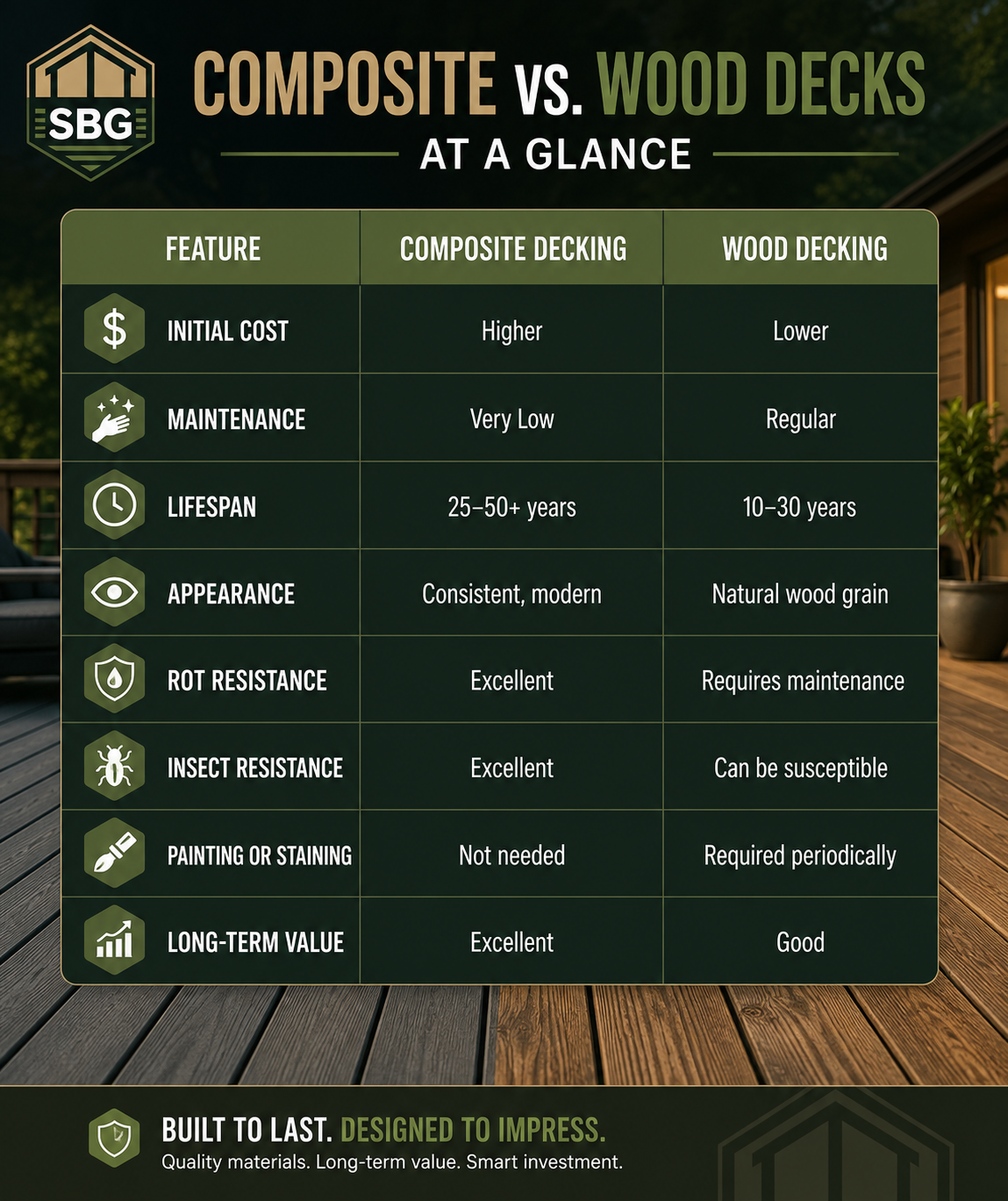
Composite vs. Wood Decks at a Glance
Understanding the Difference
Although both materials create beautiful outdoor spaces, they are built with different priorities in mind.
Composite Decking
Composite decking is manufactured from recycled wood fibers and durable polymers, creating boards designed to resist moisture, fading, and everyday wear.
Many premium composite products closely resemble natural hardwood while eliminating much of the maintenance associated with wood.
Wood Decking
Wood decking is made from natural lumber such as:
Pressure-treated pine
Cedar
Redwood
Tropical hardwoods
Natural wood offers warmth and character that many homeowners appreciate, but it requires ongoing care to maintain its appearance and structural integrity.
Appearance: Traditional vs. Contemporary
Your deck should complement the style of your home.
Why Homeowners Choose Wood
Wood offers a timeless appearance that's difficult to duplicate.
Benefits include:
Natural grain patterns
Warm color variation
Authentic texture
Traditional craftsmanship
Each board has its own unique character, making every deck one of a kind.
Why Homeowners Choose Composite
Composite has become increasingly popular because of its refined appearance and consistency.
Modern products offer:
Realistic wood textures
Wide color selections
Hidden fastening systems
Smooth, uniform finishes
For contemporary homes, composite often provides a cleaner, more polished look.
Maintenance: How Much Time Do You Want to Spend?
Maintenance is where the biggest difference becomes clear.
Composite Maintenance
Composite decks are designed for convenience.
Routine care generally includes:
Sweeping leaves and debris
Occasional washing with mild soap and water
Inspecting hardware annually
There's no need for routine staining or sealing.
Wood Maintenance
Wood requires regular attention to preserve both its appearance and performance.
Typical maintenance includes:
Cleaning
Staining or sealing every few years
Replacing damaged boards
Checking for moisture damage
Inspecting for insect activity
If maintenance is delayed, wood can begin to crack, warp, or deteriorate.
Durability and Longevity
A deck is exposed to sun, rain, changing temperatures, and heavy foot traffic throughout the year.
Composite Decks
Composite performs exceptionally well because it resists:
Moisture
Rot
Mold
Splintering
Fading
Insect damage
Many manufacturers also offer extensive product warranties.
Wood Decks
Wood remains a durable option when properly maintained, but it is naturally more vulnerable to environmental conditions.
Common concerns include:
Moisture absorption
Surface checking
Splitting
Rot
Termite damage
Weathering
Regular maintenance significantly extends its lifespan.
Cost Comparison
Wood generally costs less upfront, making it attractive for homeowners working within a tighter budget.
Composite requires a larger initial investment but often costs less to own over time because maintenance expenses are greatly reduced.
When comparing costs, consider both the installation price and the ongoing expense of maintaining the deck over the next 20 years.
Which Material Adds More Value?
Both composite and wood decks can increase property value when professionally designed and constructed.
However, today's buyers often appreciate features that require less maintenance.
Composite decking is especially attractive to buyers who want an outdoor living space they can enjoy immediately without planning future staining or repairs.
The greatest value comes from:
Quality construction
Thoughtful design
Durable materials
Proper lighting
Attractive railings
Functional entertaining space
Which Deck Is Best for Your Lifestyle?
Choose wood decking if you:
Love the look of natural lumber
Don't mind routine maintenance
Want a lower upfront investment
Prefer traditional building materials
Choose composite decking if you:
Want minimal maintenance
Plan to stay in your home for many years
Prefer long-term durability
Want lasting color without staining
Value convenience over ongoing upkeep
Frequently Asked Questions
Does composite decking get hot?
Like most outdoor materials, composite decking can become warm in direct sunlight. Lighter colors generally stay cooler than darker ones, and shade structures such as pergolas can make the space more comfortable during the summer.
Does a wood deck last as long as composite?
With proper maintenance, a wood deck can last for many years. Composite decking typically has a longer lifespan because it is more resistant to moisture, insects, and weather-related deterioration.
Is composite worth the extra cost?
For many homeowners, yes. Although the initial investment is higher, the reduced maintenance and longer lifespan often make composite the better long-term value.
The Bottom Line
Choosing between composite and wood decking isn't about finding a universal winner. It's about selecting the material that best matches your priorities.
If you value natural character and a lower upfront investment, wood remains an excellent option. If you want lasting performance with minimal maintenance, composite is often the smarter long-term choice.
At SBG (Slayton Builder's Group), we help homeowners throughout the Richmond area design and build outdoor spaces that fit their lifestyle, budget, and vision. Whether you're considering composite decking, natural wood, or a complete backyard transformation, we're committed to building a space you'll enjoy for years to come.
Thinking about adding a new deck to your home? Contact SBG today to discuss your project and explore the decking materials that best fit your property and goals.
